Introduction:
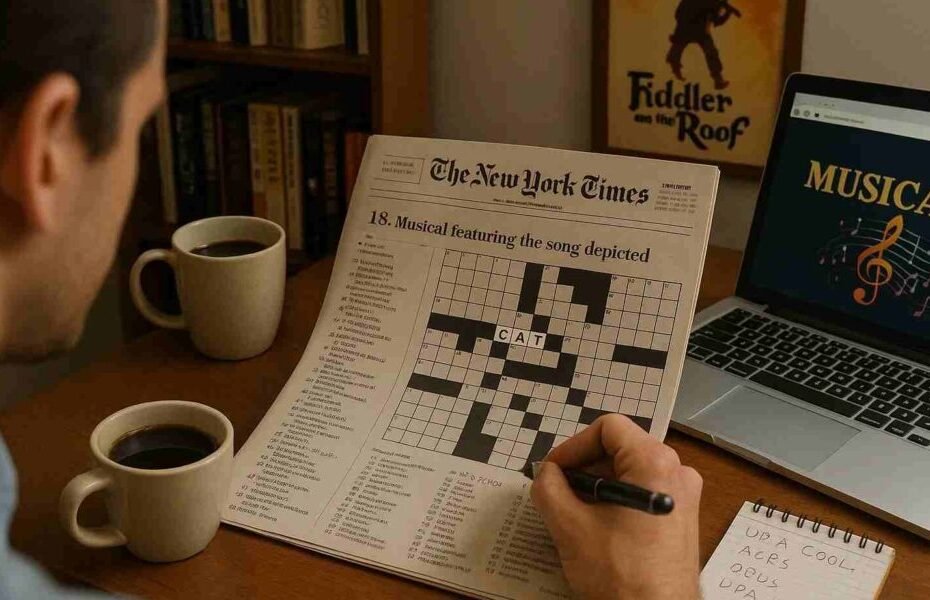
The keyword musical featuring the song depicted nyt has recently gained attention among theater lovers and crossword enthusiasts alike. This phrase references Broadway productions highlighted in the New York Times crossword clues, where iconic songs are often used as hints to identify legendary musicals. For many readers, this search term merges two worlds—puzzle-solving and musical theater—both rooted in creativity, culture, and storytelling.
In this article, we’ll dive into what the musical featuring the song depicted nyt means, why it appears in puzzles, and how it connects audiences to some of the most celebrated musicals ever written. From Broadway’s golden age to modern hits, you’ll find a detailed exploration of music, culture, and trivia tied together with history.
What Does “Musical Featuring the Song Depicted NYT” Mean?
At its core, the phrase refers to crossword clues from the New York Times (NYT) that hint at a Broadway musical by mentioning one of its iconic songs. For example:
- If the crossword says “Musical featuring the song ‘Memory’” → the answer is Cats.
- If it says “Musical featuring the song ‘Seasons of Love’” → the answer is Rent.
- If it mentions “Musical featuring the song ‘Tonight’” → the answer is West Side Story.
These clues bridge the crossword-solving community and Broadway enthusiasts, making the musical featuring the song depicted nyt an intriguing way to test both memory and cultural knowledge.
Why NYT Crosswords Highlight Musicals
Cultural Importance
The New York Times crossword is famous for pulling clues from literature, history, pop culture, and especially Broadway. Musicals represent American cultural history, making them perfect trivia for puzzles.
Broadway’s Role in American Arts
New York City is the home of Broadway. Many iconic musicals debuted there, so naturally, the musical featuring the song depicted nyt clues resonate strongly with local and global readers alike.
Examples of Popular Musicals Depicted in NYT Crosswords
To understand the context, here are some musicals frequently referenced in crossword puzzles with their famous songs:
| Song | Musical | Year of Debut |
|---|---|---|
| “Memory” | Cats | 1981 |
| “Defying Gravity” | Wicked | 2003 |
| “Do-Re-Mi” | The Sound of Music | 1959 |
| “I Dreamed a Dream” | Les Misérables | 1980 |
| “Tomorrow” | Annie | 1977 |
| “Seasons of Love” | Rent | 1996 |
Each of these songs serves as shorthand for its respective musical, giving crossword creators a clever way to test knowledge.
How to Solve “Musical Featuring the Song Depicted NYT” Clues
Step 1: Recognize the Song
If you know the song, half the battle is won. For instance, “On My Own” instantly points to Les Misérables.
Step 2: Look at Letter Count
Crosswords often tell you the number of letters. Matching the song to a musical of the right length helps eliminate wrong guesses.
Step 3: Use Crossword Cross-Checks
Even if you don’t know the song, solving surrounding words provides hints. Many crossword fans learn new musicals this way.
Famous Broadway Musicals Linked to Crossword Clues
1. Cats
- Song: “Memory”
- Significance: One of the longest-running Broadway musicals, with music by Andrew Lloyd Webber.
2. Wicked
- Song: “Defying Gravity”
- Significance: A modern Broadway hit that reimagines the world of The Wizard of Oz.
3. Rent
- Song: “Seasons of Love”
- Significance: Captures the struggles of young artists in New York City during the HIV/AIDS crisis.
4. The Sound of Music
- Song: “Do-Re-Mi”
- Significance: A Rodgers & Hammerstein classic based on the von Trapp family.
5. Les Misérables
- Song: “I Dreamed a Dream”
- Significance: Adapted from Victor Hugo’s novel, exploring love, loss, and revolution.
Why People Search for Musical Featuring the Song Depicted NYT
The rising search trend can be attributed to:
- Crossword Popularity: Millions solve the NYT crossword daily.
- Broadway Fandom: Musical fans love testing their knowledge.
- Pop Culture Tie-Ins: Many musicals have movie adaptations, making them familiar even to non-theater fans.
Impact of Broadway Songs on Popular Culture
Broadway songs often transcend the stage:
- “Memory” by Barbra Streisand became a radio hit.
- “I Dreamed a Dream” gained new life through Susan Boyle’s viral performance.
- “Do-Re-Mi” became a staple in schools worldwide.
This cultural crossover explains why the musical featuring the song depicted nyt puzzle clues are so widely understood.
Crossword Tricks:
- Short Musical Titles: Cats, Rent, Annie are crossword favorites because they’re short.
- Recurrent Songs: Songs like “Tonight” or “Tomorrow” often appear because of their crossword-friendly letter patterns.
- Classic Musicals Over New: While new musicals appear, classics dominate crossword grids.
How Broadway Fans Use These Clues
For theater fans, NYT crossword clues aren’t just puzzles—they’re nostalgic reminders of songs they love. Many people discover new musicals while solving puzzles and later stream their soundtracks or attend performances.
The Relationship Between Music, Memory, and Crossword Solving
Research shows that music strengthens memory. That’s why musical featuring the song depicted nyt clues are effective—they trigger recognition, allowing solvers to recall musicals quickly.
Learning Broadway History Through NYT Crosswords
Crossword clues serve as bite-sized lessons in Broadway history. Each mention of a musical featuring the song depicted nyt educates solvers about theater milestones, composers, and lyricists.
Why Musicals Are Perfect Crossword Material
- Catchy Titles: Easy to fit into grids.
- Cultural Recognition: Universally known songs.
- Educational Value: Teach solvers about arts and literature.
Conclusion:
The phrase musical featuring the song depicted nyt may sound like a niche crossword clue, but it represents something bigger—how Broadway musicals continue to influence daily life, from puzzles to playlists. Whether you’re a crossword solver, a Broadway lover, or both, these clues connect you to timeless art that defines generations. Next time you see a crossword hint about a musical song, you’ll know exactly how to solve it—and appreciate the cultural bridge it builds.